However, I never had a problem coming out with outlines. In fact, when I preach, I preach from outlines. Some people manuscript the whole sermon word-by-word; that never worked for me and, honestly, would have taken away the joy of preaching.
So it's a bit ironic that over the past couple of years, I've had a growing sense that God wants me to put what I've learned into writing. I felt the tension between the vision and the reality.
I did some research on this tension and learned about ghostwriters. People who love to take the ideas of others and put them into writing! What a win! Many books credit their ghostwriters, and many do not. I knew I wanted to be the one who did.
So I wrote the whole book in outline form first: the chapters, what each one was about, and the movement. Then within each chapter, I created an outline as well. Then I found a ghostwriter online and asked her to take my outline and make it into a book.
The ghostwriter did what I asked, but when the manuscript came back, I felt disappointed. It just didn't sound like me. I felt a bit discouraged and waited.
Later, I was talking to my cousin's wife, and she shared how she was doing more book editing. I set up an appointment with her, intending to ask her if she would be willing to be my ghostwriter. She knew me and would do a better job articulating my voice. However, when I asked her, she strongly encouraged me to take another run at writing it myself. I described my struggles with writing, and she asked some probing questions to learn more about me. The aha she helped me discover is that I have no problem verbalizing my ideas; writing them down is difficult. She encouraged me to record my thoughts and get them transcribed.
So that's what I did. Then I asked AI for help. I fed it my table of contents and my chapter outlines. Then, for each chapter, I fed it my recordings and random notes, taught it to understand my writing style from previous work, and asked it to draft the chapter. When it came back with a draft, I went through it line by line, editing and changing it to make it mine. AI helped me find relevant studies, and I went back and checked those against their original sources before anything went into the final manuscript. When it was all done, I asked AI to be my editor, and it did a fabulous job, catching inconsistencies, punctuation errors, etc. I read the whole book, then gave it to ten beta readers who gave me valuable feedback.
When I held the finished manuscript in my hands, I was incredibly pleased. This hybrid process of recording my thoughts and shaping them line-by-line resulted in a book that sounded unmistakably like me.
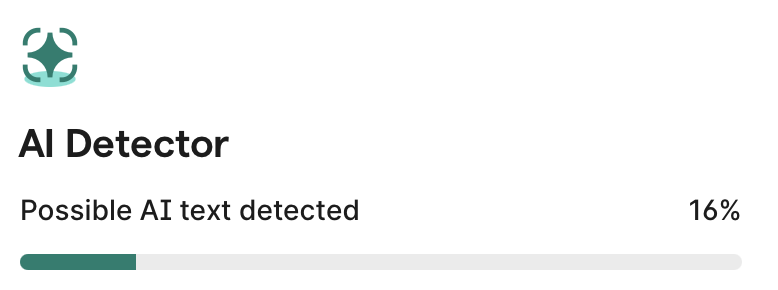
As AI is exploding in our day and age, there are lots of questions about how it is being used in writing and publishing. I wanted to share how I integrated it into my process.
The book this story is about.
The Evening Habit: Win Your Morning the Night Before. A practical guide for anyone who is tired of starting the day already behind.